



Introduction
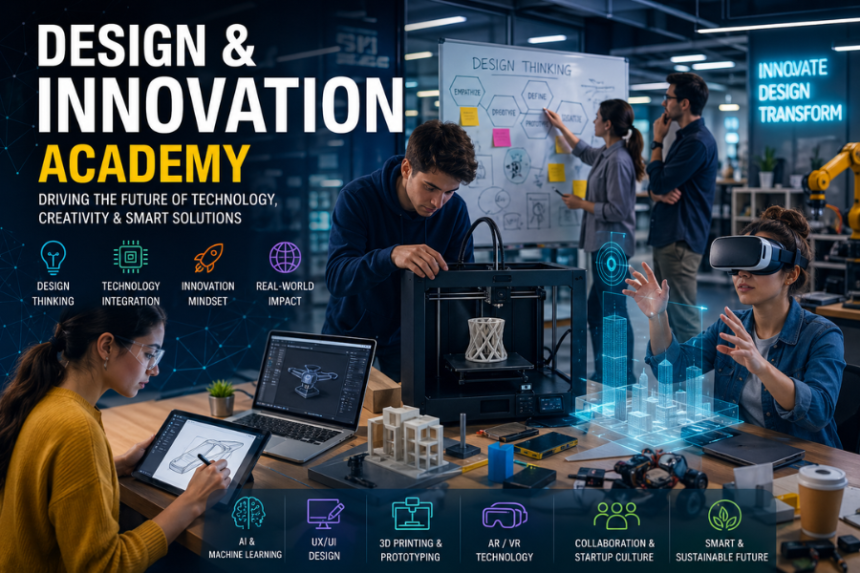
A Design and Innovation Academy represents a new era in education where creativity meets cutting-edge technology. Unlike traditional institutions, these academies focus on solving real-world problems through design thinking, experimentation, and technology-driven learning. They empower students to think beyond textbooks and build solutions that are practical, scalable, and impactful.
In today’s rapidly evolving digital landscape, industries demand professionals who are not only technically skilled but also creative problem solvers. A Design and Innovation Academy bridges this gap by blending innovation in education with hands-on technological experience. From building prototypes to designing user-friendly applications, students are trained to become future innovators.
Core Concept of a Design and Innovation Academy
At the heart of every Design and Innovation Academy lies design thinking, a human-centered approach to problem-solving. This method encourages students to deeply understand user needs, redefine problems, and create innovative solutions through iterative processes.
Key Elements of the Core Concept:
1. Design Thinking Methodology
Students follow structured stages:
- Empathize with users
- Define the problem
- Ideate creative solutions
- Prototype designs
- Test and refine
This approach ensures solutions are both functional and user-focused.
2. Innovation Frameworks
Modern academies adopt frameworks like:
- Agile development
- Lean startup methodology
- Rapid prototyping
These frameworks help students quickly transform ideas into real products.
3. Problem-Solving Mindset
A design thinking academy emphasizes critical thinking and encourages experimentation. Failure is treated as a learning step, fostering resilience and adaptability.
Technology Integration in Design and Innovation Academies
A major strength of any Design and Innovation Academy is its integration of advanced technologies into the learning process. This ensures students are industry-ready and familiar with modern tools.
Artificial Intelligence (AI)
AI is revolutionizing how products are designed and developed. Students learn:
- Machine learning basics
- Predictive design systems
- AI-powered automation tools
AI enables smarter decision-making and personalized user experiences.
UX/UI Design Tools
User experience is critical in today’s digital world. Students use tools like:
- Figma
- Adobe XD
- Sketch
These tools help in creating intuitive and visually appealing digital interfaces.
Product Design Software
Software such as CAD (Computer-Aided Design) allows students to:
- Design physical and digital products
- Simulate real-world performance
- Optimize product efficiency
3D Printing & Prototyping
Hands-on innovation is a core part of creative tech education. With 3D printing:
- Ideas become tangible prototypes
- Rapid iteration becomes possible
- Students test real-world functionality
Virtual Reality (VR) & Augmented Reality (AR)
Immersive technologies are transforming industries. Students explore:
- VR simulations for training and design
- AR applications for interactive experiences
- Virtual product testing environments
Curriculum & Learning Approach
A Design and Innovation Academy adopts a non-traditional, flexible, and practical learning model.
Practical Learning
Instead of focusing only on theory, students engage in:
- Hands-on projects
- Lab experiments
- Real product development
Project-Based Innovation
Students work on real-world challenges such as:
- Designing smart applications
- Developing sustainable products
- Creating digital platforms
This builds confidence and practical expertise.
Real-World Problem Solving
Collaboration with industries allows students to:
- Work on live projects
- Solve actual business problems
- Gain industry insights
Collaboration and Startup Culture
Teamwork is a key component. Students often:
- Work in multidisciplinary teams
- Participate in hackathons
- Launch startup ideas
This environment nurtures entrepreneurship and innovation.
Impact on the Tech Industry
The rise of Design and Innovation Academies is significantly shaping the future of the tech industry.
Startups and Entrepreneurship
Many students go on to launch startups by:
- Turning ideas into viable products
- Building scalable business models
- Attracting investors
Digital Transformation
Organizations benefit from graduates who:
- Understand both design and technology
- Drive digital change
- Improve user experiences
Product Innovation
These academies contribute to:
- Faster product development cycles
- User-centered product design
- Innovative tech solutions
Future Job Markets
The demand for professionals with hybrid skills is growing. Roles include:
- UX/UI designers
- Product managers
- Innovation strategists
- AI-driven designers
Benefits for Students
Enrolling in a Design and Innovation Academy provides a wide range of benefits.
Critical Thinking Skills
Students learn to analyze problems deeply and develop effective solutions.
Creativity + Technical Skills
They gain a unique combination of:
- Artistic creativity
- Technical expertise
Innovation Mindset
Students become:
- Curious thinkers
- Problem solvers
- Future innovators
Digital Tools Expertise
Hands-on experience with modern tools prepares them for real-world careers in technology-driven learning environments.
Future Trends in Design and Innovation Academies
As technology evolves, Design and Innovation Academies continue to adapt and lead innovation in education.
AI-Driven Design
Artificial intelligence will automate repetitive design tasks and enhance creativity through data-driven insights.
Smart Cities Innovation
Students will contribute to:
- Urban planning solutions
- Smart infrastructure
- Sustainable city development
Sustainable Product Design
Eco-friendly innovation is becoming essential. Academies focus on:
- Green materials
- Energy-efficient solutions
- Circular design systems
Human-Centered Technology
Future innovations will prioritize:
- User needs
- Accessibility
- Ethical technology development
Conclusion
A Design and Innovation Academy is more than just an educational institution—it is a hub of creativity, technology, and forward-thinking ideas. By combining design thinking, advanced tools, and real-world problem-solving, these academies are shaping the next generation of innovators.
As industries continue to evolve, the demand for professionals skilled in creative tech education and technology-driven learning will only grow. Design and Innovation Academies play a crucial role in preparing individuals to meet these challenges, drive innovation, and build a smarter, more sustainable future.
In a world where creativity and technology intersect, these academies stand at the forefront—empowering minds, transforming ideas, and redefining the future of innovation.