



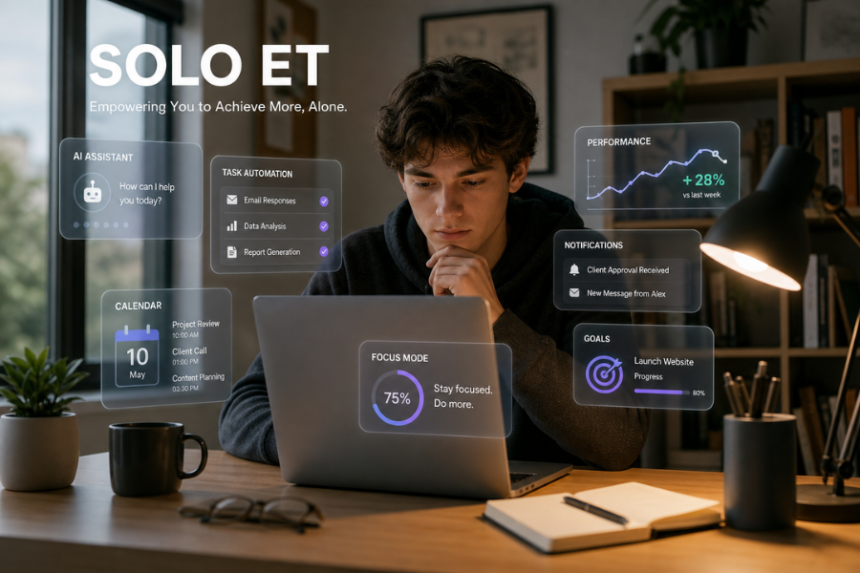
In the modern world of technology, the focus is steadily shifting from large, team-based systems to tools designed for individuals. This shift has given rise to a powerful concept known as Solo ET. As digital independence grows — driven by freelancers, creators, and solo entrepreneurs — the demand for smarter, self-sufficient tools has increased significantly.
Solo ET represents a new way of interacting with technology, where systems are tailored to meet the needs of a single user rather than a group. It combines intelligent automation, personalization, and streamlined workflows to empower individuals to work more efficiently and independently.
In this comprehensive guide, we’ll explore what Solo ET is, how it works, its core technologies, real-world applications, advantages, limitations, and how it compares to traditional tools.
What Is Solo ET?
Solo ET (Solo Experience Technology) refers to a category of digital tools, platforms, and systems designed specifically for individual users. Unlike traditional enterprise software built for teams, Solo ET focuses on optimizing productivity, efficiency, and experience for a single person.
Rather than requiring collaboration, approvals, or shared workflows, Solo ET tools enable users to operate independently, making decisions and completing tasks without relying on others.
Simple Definition:
Solo ET is technology designed to help one person do the work of many — smarter, faster, and more efficiently.
The Purpose of Solo ET
The main goal of Solo ET is to empower individuals in a digital environment where independence is becoming increasingly valuable.
Key Objectives:
- Self-Sufficiency: Allow users to manage tasks without external support
- Efficiency: Reduce manual work through automation
- Personalization: Customize tools based on user behavior
- Productivity Boost: Help individuals achieve more in less time
As remote work, freelancing, and digital entrepreneurship grow, Solo ET is becoming an essential part of modern workflows.
Core Technologies Behind Solo ET
Solo ET is powered by several advanced technologies working together to create a seamless user experience.
Artificial Intelligence (AI)
AI plays a central role by analyzing user behavior and providing intelligent suggestions. It can automate writing, scheduling, decision-making, and more.
Machine Learning (ML)
Machine learning enables systems to learn from user actions and improve over time, making tools more accurate and personalized.
Automation Systems
Automation handles repetitive tasks such as:
- Email responses
- Task scheduling
- File organization
This frees up time for more meaningful work.
Cloud Computing
Cloud-based platforms allow users to access their data anytime, anywhere, ensuring flexibility and mobility.
Data Analytics
Analytics track user performance and provide insights, helping individuals optimize their workflow.
Key Features of Solo ET
Solo ET tools are designed with the individual in mind. Here are their standout features:
User-Centric Design
- Clean, simple interfaces
- Minimal distractions
- Focus on usability
Smart Personalization
- Adapts to your habits
- Suggests actions based on past behavior
Automation Capabilities
- Reduces repetitive work
- Speeds up daily processes
Independent Workflow
- No need for team collaboration
- Full control over tasks and decisions
Cross-Platform Access
- Works across devices (mobile, desktop, tablet)
- Syncs data in real time
How Solo ET Works
Solo ET operates through a continuous loop of interaction and improvement.
Step-by-Step Process:
- Data Collection
The system observes user behavior, preferences, and patterns. - Processing & Learning
AI and machine learning analyze this data to understand user needs. - Personalized Output
The system adapts by offering:- Smart suggestions
- Automated actions
- Customized interfaces
- Continuous Improvement
The more you use it, the smarter and more efficient it becomes.
Applications of Solo ET in Modern Digital Environments
Solo ET is already transforming multiple industries and workflows.
Freelancing & Remote Work
Freelancers use Solo ET tools to:
- Manage projects
- Communicate with clients
- Automate invoicing
Content Creation
Writers, bloggers, and video creators benefit from:
- AI writing assistants
- Content scheduling tools
- Editing automation
Online Learning
Students and self-learners use personalized platforms that:
- Adapt to learning speed
- Recommend resources
- Track progress
Solo Entrepreneurship
Entrepreneurs can run entire businesses using Solo ET tools for:
- Marketing
- Customer management
- Financial tracking
Personal Productivity
Individuals use Solo ET apps for:
- Task management
- Goal tracking
- Time optimization
Real-World Use Cases
Case 1: Freelance Designer
A designer uses AI-powered tools to:
- Create designs faster
- Automate revisions
- Manage clients independently
Case 2: Blogger
A blogger uses Solo ET tools to:
- Generate content ideas
- Optimize SEO
- Schedule posts automatically
Case 3: Online Seller
An eCommerce seller uses automation to:
- Track inventory
- Respond to customers
- Analyze sales trends
Advantages of Solo ET
Increased Productivity
Users can accomplish more tasks in less time.
Cost-Effective
No need for large teams or expensive enterprise software.
Flexibility
Work anytime, anywhere with cloud-based systems.
Personalized Experience
Tools adapt to individual preferences and workflows.
Faster Decision-Making
AI-driven insights help users make quick, informed decisions.
Potential Limitations of Solo ET
While powerful, Solo ET also has some challenges:
Limited Collaboration
Not ideal for projects requiring teamwork.
Over-Reliance on Technology
Users may become too dependent on automation.
Data Privacy Concerns
Personalization requires data collection, which raises security issues.
Learning Curve
Some tools may require time to fully understand and use effectively.
Solo ET vs Traditional Technology
| Feature | Solo ET | Traditional Tools |
| Target User | Individual | Teams/Organizations |
| Workflow | Independent | Collaborative |
| Personalization | High | Moderate |
| Automation | Advanced | Basic/Varies |
| Complexity | Simple & intuitive | Often complex |
Key Insight:
Solo ET is ideal for independent users, while traditional tools remain essential for team-based environments.
Future of Solo ET
The future of Solo ET looks promising as technology continues to evolve.
Emerging Trends:
- Smarter AI assistants
- Voice-controlled workflows
- Hyper-personalized digital environments
- Integration with wearable tech
As innovation continues, Solo ET could redefine how individuals interact with digital systems, making technology even more intuitive and powerful.
FAQs About Solo ET
Q1: Is Solo ET a specific software?
No, Solo ET is a concept or category of technologies focused on individual users.
Q2: Who should use Solo ET?
Freelancers, students, entrepreneurs, and anyone who prefers independent workflows.
Q3: Can Solo ET replace teams?
Not entirely. It reduces dependency on teams but doesn’t eliminate the need for collaboration.
Q4: Is Solo ET secure?
It can be secure if proper privacy settings and trusted tools are used.
Q5: Is Solo ET suitable for beginners?
Yes, most Solo ET tools are designed to be user-friendly and easy to learn.
Conclusion
Solo ET is more than just a technological trend — it’s a shift toward individual empowerment in the digital age. By combining AI, automation, and personalization, Solo ET enables people to work smarter, faster, and more independently than ever before.
Whether you’re a freelancer, student, creator, or entrepreneur, adopting Solo ET tools can significantly enhance your productivity and efficiency. As technology continues to evolve, Solo ET is set to play a key role in shaping the future of digital work and innovation.