



Introduction
In today’s fast-paced and highly competitive business environment, organizations must maintain consistency, efficiency, and quality across all operations. One of the most effective tools to achieve this is the Protocolo Operacional Padrão (POP), also known as a Standard Operating Procedure (SOP). POP serves as a structured framework that guides employees on how to perform tasks correctly and consistently.
Businesses that adopt POP in their daily operations are better equipped to reduce errors, improve productivity, and maintain high-quality standards. Whether in manufacturing, healthcare, finance, or service industries, POP ensures that every process is executed in a uniform and controlled manner.
By implementing well-defined POPs, organizations can streamline workflows, enhance communication, and create a solid foundation for sustainable growth and operational excellence.
What is Protocolo Operacional Padrão (POP)?
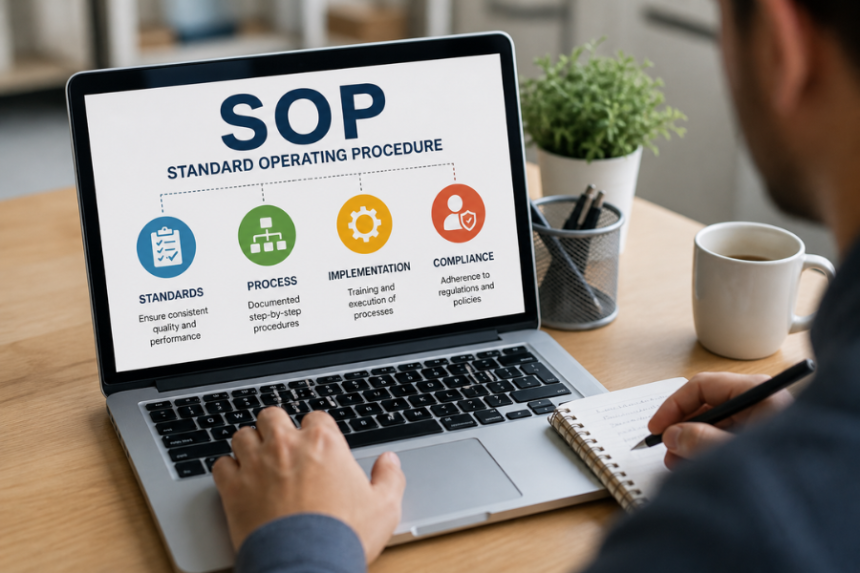
A Protocolo Operacional Padrão (POP) is a documented set of step-by-step instructions designed to help employees carry out routine operations effectively and consistently. It is a key component of operational management processes that ensures tasks are performed according to predefined standards.
In a business context, POP plays a critical role in workflow standardization, enabling organizations to maintain uniformity across departments. It eliminates ambiguity by clearly outlining how tasks should be completed, who is responsible, and what standards must be met.
Ultimately, POP acts as a reference guide that supports employees in delivering consistent results while aligning with organizational goals and compliance requirements.
Key Components of POP
An effective POP includes several essential elements that ensure clarity, usability, and consistency:
1. Step-by-Step Procedures
Detailed instructions outlining each stage of a process, ensuring tasks are performed accurately and efficiently.
2. Responsibilities and Roles
Clear identification of who is responsible for each task, reducing confusion and improving accountability.
3. Documentation Standards
Guidelines for recording and maintaining process-related information, ensuring traceability and transparency.
4. Compliance and Safety Guidelines
Instructions that ensure adherence to legal, regulatory, and safety requirements, minimizing risks and liabilities.
Importance in Business Operations
Implementing POP in business operations is crucial for maintaining efficiency and consistency. Here’s how it supports organizations:
Improving Productivity
By providing clear instructions, POP reduces time spent figuring out tasks, enabling employees to work faster and more effectively.
Reducing Errors
Standardized procedures minimize the chances of mistakes, leading to more reliable outcomes.
Ensuring Quality Control
POP ensures that every product or service meets consistent quality standards, enhancing customer satisfaction.
Training Employees
New employees can quickly learn processes through documented procedures, reducing onboarding time.
Maintaining Compliance
POP helps organizations comply with industry regulations and internal policies, reducing legal and operational risks.
Benefits of Implementing POP
Adopting POP in business operations offers several strategic advantages:
Operational Efficiency
Standardized workflows eliminate redundancies and streamline processes, improving overall business efficiency.
Cost Reduction
Fewer errors and improved processes lead to lower operational costs and reduced waste.
Better Communication
Clear documentation ensures everyone understands their roles and responsibilities, improving team coordination.
Risk Management
POP helps identify and control potential risks by enforcing consistent procedures and safety guidelines.
Scalability of Business Processes
With standardized systems in place, businesses can scale operations more easily without compromising quality or efficiency.
How to Develop an Effective POP
Creating a well-structured POP requires a systematic approach. Follow these steps:
1. Identify the Process
Determine which business process needs standardization. Focus on tasks that are repetitive or critical to operations.
2. Define Objectives
Clearly outline the goals of the procedure, such as improving efficiency, ensuring compliance, or enhancing quality.
3. Document Procedures
Write detailed, step-by-step instructions using simple and clear language. Include visuals or diagrams if necessary.
4. Assign Responsibilities
Specify who is responsible for each step to ensure accountability and smooth execution.
5. Test and Improve
Implement the POP on a small scale, gather feedback, and refine the procedure to ensure effectiveness and practicality.
Conclusion
The Protocolo Operacional Padrão (POP) is a fundamental tool in modern operational management processes, enabling organizations to achieve consistency, efficiency, and high-quality outcomes. By standardizing workflows and clearly defining responsibilities, POP enhances productivity, reduces errors, and supports compliance.
Businesses that invest in developing and maintaining effective POPs position themselves for long-term success. As organizations grow and evolve, POP serves as a reliable foundation for scalability, risk management, and continuous improvement.
Incorporating POP in business operations is not just a best practice—it is a strategic necessity for achieving sustainable growth and operational excellence.