


Introduction
Launching a startup is an exciting yet financially demanding journey. From product development to marketing and scaling operations, every stage requires adequate capital. Without a clear funding plan, even the most innovative ideas can struggle to survive in competitive markets. This is why having a structured approach to fundraising is critical for long-term success.
A well-designed Startup Booted Fundraising Strategy allows entrepreneurs to secure funding efficiently while maintaining control over their business vision. It blends smart financial planning with strategic decision-making, helping founders identify the right funding sources at the right time.
For early-stage businesses, capital is more than just money—it’s a growth enabler. With proper financial planning, startups can optimize resources, attract investors, and scale sustainably without compromising their equity or operational efficiency.
What is Startup Booted Fundraising Strategy?
A Startup Booted Fundraising Strategy refers to a structured approach that combines bootstrapping (self-funding) with external fundraising methods to build and grow a startup. It emphasizes financial discipline, gradual scaling, and strategic capital acquisition.
Key Aspects:
- Focus on minimizing early dependency on external funding
- Using internal resources before seeking investors
- Gradually introducing external capital when scaling is required
Role in Startup Finance:
This strategy helps startups:
- Maintain better control over ownership
- Reduce financial risk
- Improve valuation before raising funds
Who is it Useful For?
- Startup founders looking to retain equity
- Entrepreneurs building scalable business models
- Investors seeking disciplined and capital-efficient startups
Key Fundraising Stages for Startups
Understanding funding stages is essential to implementing a successful Startup Booted Fundraising Strategy.
Pre-Seed Funding
- Initial capital used for idea validation
- Sources: personal savings, friends, family
- Focus: product development and market research
Seed Funding
- Early-stage funding to launch the product
- Sources: angel investors, early-stage funds
- Focus: building a minimum viable product (MVP) and acquiring initial users
Series A, B, C Rounds
- Series A: Scaling product and team
- Series B: Expanding market reach
- Series C: Rapid growth, acquisitions, or global expansion
Bootstrapping vs External Funding
| Bootstrapping | External Funding |
| Self-funded | Investor-funded |
| Full control | Shared ownership |
| Slower growth | Faster scaling |
| Lower risk | Higher expectations |
A balanced Startup Booted Fundraising Strategy often combines both approaches for optimal results.
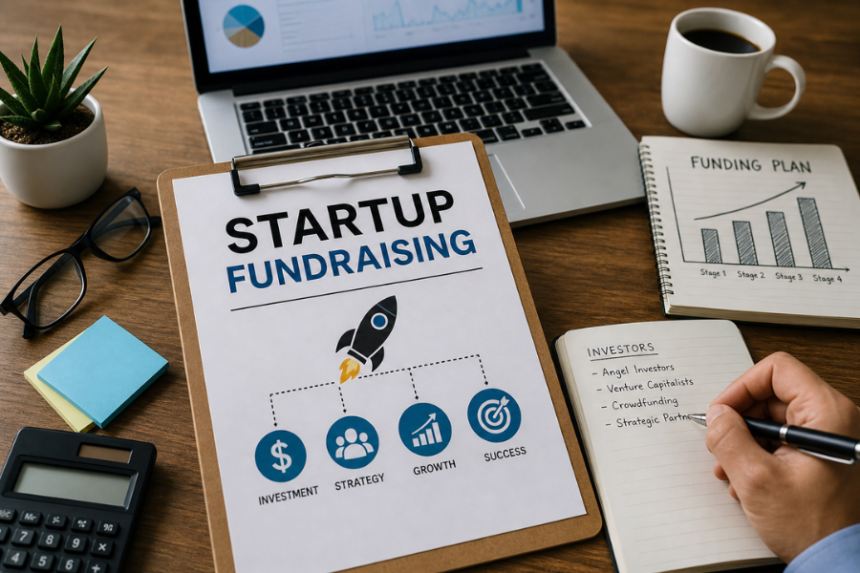
Core Fundraising Strategies
1. Bootstrapping Methods
- Personal savings
- Revenue reinvestment
- Cost optimization
- Lean business operations
2. Angel Investors
- High-net-worth individuals investing early
- Provide mentorship and networking opportunities
3. Venture Capital Funding
- Institutional investment for high-growth startups
- Requires strong traction and scalability
4. Crowdfunding Platforms
- Raising small amounts from a large audience
- Validates product demand while generating funds
5. Strategic Partnerships
- Collaborations with established companies
- Access to resources, technology, and market reach
Financial Planning for Fundraising Success
A strong financial foundation is essential for executing a Startup Booted Fundraising Strategy.
Creating a Strong Business Plan
- Clear mission and vision
- Defined target market
- Competitive analysis
- Revenue model
Building Financial Projections
- Cash flow forecasts
- Revenue growth estimates
- Break-even analysis
Valuation Basics
- Determine startup worth based on:
- Market size
- Revenue potential
- Growth metrics
- Avoid unrealistic valuations
Investor Pitching Strategy
- Develop a compelling pitch deck
- Highlight problem, solution, and traction
- Showcase financial data and scalability
Common Challenges in Fundraising
Lack of Investor Interest
- Weak business model
- Poor market research
- Limited traction
Poor Financial Documentation
- Inaccurate financial records
- Lack of transparency
Overvaluation or Undervaluation
- Overvaluation scares investors
- Undervaluation leads to equity loss
Market Competition
- High competition reduces investor confidence
- Need for differentiation and innovation
Tips for Startup Founders
How to Attract Investors
- Demonstrate strong market demand
- Show clear growth potential
- Build a scalable business model
Improving Pitch Decks
- Keep it concise and data-driven
- Focus on value proposition
- Use visuals and real metrics
Managing Equity Distribution
- Avoid giving away too much equity early
- Plan long-term ownership structure
Building Investor Trust
- Maintain transparency
- Deliver consistent results
- Communicate regularly with stakeholders
Conclusion
A well-executed Startup Booted Fundraising Strategy is essential for building a sustainable and scalable startup. By combining bootstrapping with strategic fundraising, entrepreneurs can maintain control, reduce risk, and maximize growth potential.
From understanding funding stages to mastering financial planning and investor pitching, every step plays a crucial role in securing the right capital. Startups that approach fundraising with discipline and clarity are far more likely to succeed in today’s competitive financial landscape.
Ultimately, the key lies in balance—leveraging internal resources while strategically seeking external funding to fuel long-term success.